

The Scenario Most Construction Companies Go Through
You have decided it is time to modernize your construction business.
Like many business owners, your first instinct is to open your browser and search for:
“Construction management software”
Within seconds, dozens of solutions appear.
Many promise to centralize your entire business in a single platform: estimates, invoices, accounting, human resources, timesheets, purchasing, profitability, but also project tracking, communication with project stakeholders, document sharing, meetings, schedules and updates for the people who need visibility on progress.
On paper, these solutions seem to cover everything you need.
You compare a few features, attend several demos and naturally start asking yourself which solution to choose.
Without realizing it, you are starting your digital transformation with the last step: choosing tools.
The first few weeks are often encouraging.
The software is deployed, teams discover a new way of working and the company feels it has taken an important step toward modernization.
Then, little by little, the first limitations appear.
You realize that some features fit your needs perfectly, while others do not match the reality of your company. You may use the estimating and invoicing features, but barely touch the project tracking side. Or, on the other hand, you may adopt the project workflow while continuing to manage resources, accounting or timesheets with other tools.
Gradually, the promise of a single platform that centralizes everything gives way to everyone’s usual habits.
Project stakeholders go back to WhatsApp to communicate, documents keep moving through email, some files remain in shared folders and other tools come back into the picture for accounting, HR or profitability tracking.
In the end, you keep paying for a solution where only part of the functionality is actually used.
The processes you wanted to unify become fragmented again, traceability decreases and information spreads across several tools.
Instead of simplifying your organization, you have simply moved its complexity somewhere else.
You invested in a new solution.
Yet your organization still works almost as it did before.
The problem was not necessarily the software you chose.
It appeared long before the choice was made.
For years, digital transformation in construction was reduced to a simple question: which software should we choose?
But today, this approach is reaching its limits.
The question is no longer only which software is the best.
The real question is now:
How do we build a digital architecture that can meet the needs of our company today and tomorrow?
This shift matters because it changes the way construction companies should approach digital transformation.
A high-performing company no longer looks for one tool that can do everything. It gradually builds an ecosystem where each solution serves a clear purpose while fitting into a coherent organization.
This applies to companies across the construction industry.
U.S. Census Bureau business statistics show that the construction sector is made up of a large and diverse number of establishments, while the U.S. Small Business Administration reports that small businesses represent 99.9% of all U.S. businesses. This diversity explains why there is no single answer to digital transformation: the needs of an independent contractor are not the same as those of a growing construction firm or a larger entbusiness management softwarerise.
Yet they all share the same reality: they must run their business while managing their projects.
In other words, they must address two challenges at the same time.
The first is keeping the business running: preparing estimates, managing invoices, organizing human resources, tracking timesheets, managing equipment, handling purchases, monitoring inventory and analyzing profitability.
The second is managing projects: coordinating stakeholders, sharing documents, tracking progress, communicating with the people involved, organizing meetings, preserving decisions and making sure every stakeholder has the right information at the right time.
These two dimensions are different.
Yet they are inseparable.
A company that manages its internal operations well but has scattered project information will quickly face operational issues.
Conversely, a company that tracks projects effectively but lacks structure in its internal management will naturally limit its growth.
A real digital transformation therefore means building an architecture that allows these two worlds to work together.
This is exactly the logic that should guide the choice of construction management software.
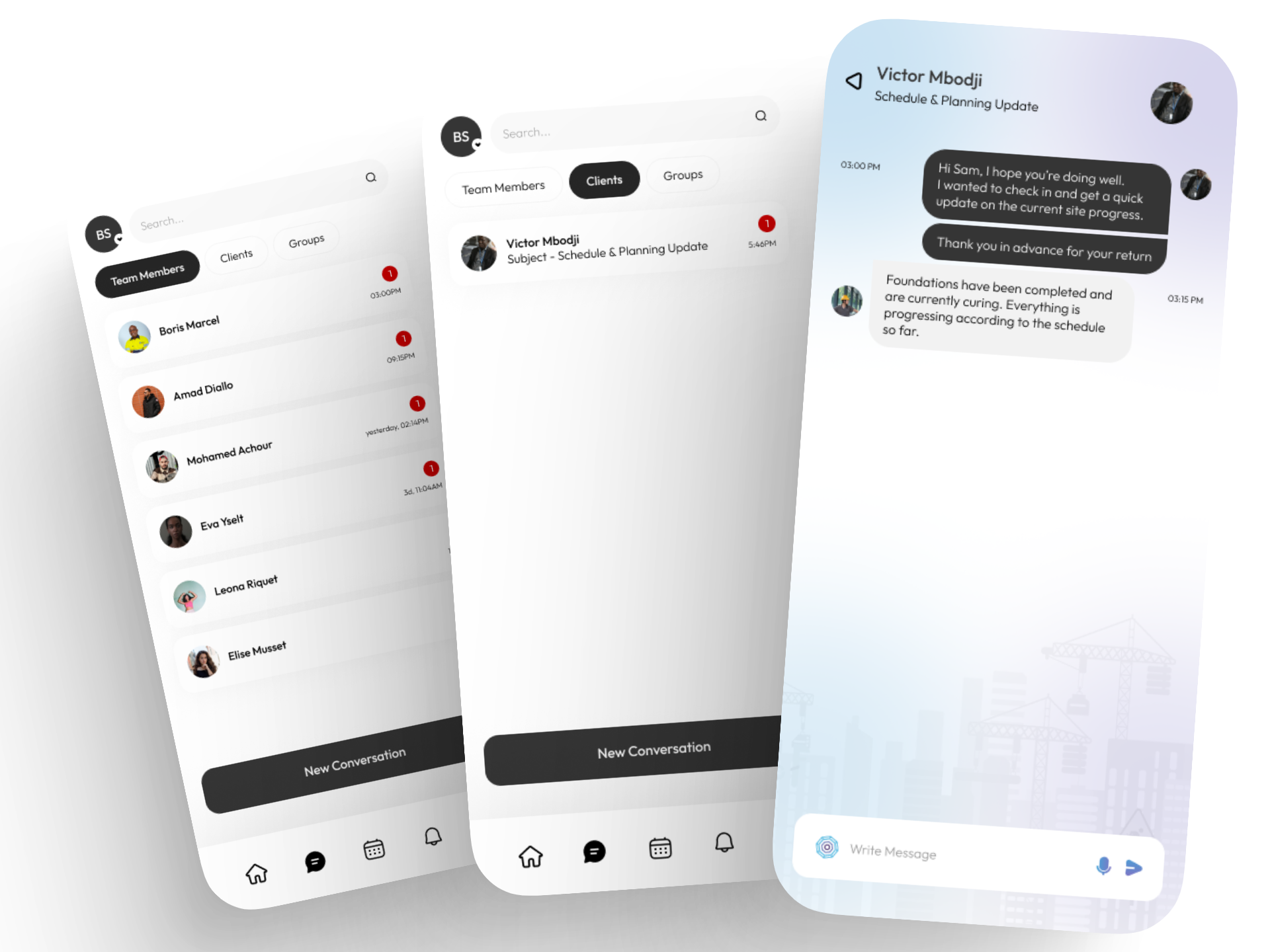
Download PIYA to better structure your construction projects
PIYA helps construction professionals centralize project information and improve collaboration between all stakeholders.
Why Construction Companies Are Going Digital Today
If more and more construction companies are questioning how they should approach digital transformation, it is not by accident.
The construction industry is evolving quickly, along with client expectations, compliance requirements and working methods. Companies now have to manage an increasing volume of information while ensuring better coordination between the different people involved in each project.
Research by Deloitte Access Economics, commissioned by Autodesk, shows that digital adoption continues to accelerate across the construction industry. The report highlights that better connected digital environments can help construction leaders reduce fragmented data, improve productivity and save an average of 10.5 hours per week. These findings confirm a central idea: digital transformation is not just a technology investment; it becomes a way to improve performance, organization and collaboration.
1. Clients expect more transparency
Today, a client does not simply want to receive a finished project.
They want to understand progress, know the next steps, be informed of important decisions and access the documents that concern them more easily.
Transparency is gradually becoming a factor of trust and differentiation for construction companies.
2. Administrative and compliance requirements are becoming more digital
Whether it involves invoicing, contracts, safety documentation, compliance records or audit trails, construction companies are expected to structure their internal processes and manage cleaner data.
This shift pushes companies to improve their internal management tools, their workflows and the quality of the administrative information they rely on every day.
3. Traceability has become essential
Every decision, approval, document or site intervention can affect the way a project unfolds.
Keeping a reliable history of exchanges, documents and decisions is no longer just an organizational comfort. It is a way to secure projects, reduce misunderstandings and preserve evidence when disagreements arise.
4. Project stakeholders need to collaborate more effectively
A construction project can involve many different people: internal employees, subcontractors, suppliers, project owners, construction managers, architects, engineering firms, inspectors and end clients.
Depending on the project, some people actively participate in the work, while others need to be informed, consulted or reassured about progress.
As the number of stakeholders grows, the flow of information becomes a central challenge.
Information sent too late, to the wrong person or through the wrong channel can quickly create delays, errors or decisions based on incomplete information.
This reality is well documented. A study by FMI Corporation in partnership with Autodesk estimated that bad data may have cost the global construction industry $1.85 trillion in 2020. Beyond the financial impact, poor data and communication issues create rework, delays and decisions made from incomplete information.
These changes do not simply make companies more digital.
They force them to rethink their organization.
And this is where an essential distinction appears: running a business and managing projects do not require the same type of information.
Before choosing the tools that will support this transformation, it is therefore necessary to understand how a construction company’s information system actually works.
Why One Software Solution Can't Meet Every Business Need
To understand why many digital transformations fail, you first need to understand how a construction company actually works.
When you look at its daily activity, one thing quickly becomes clear.
Not all the information it handles serves the same purpose.
Some information helps manage the company.
Other information helps manage projects.
This distinction seems obvious once you say it. Yet it is rarely considered when a company chooses its digital tools.
Most transformation projects start with a software search, when they should start with an analysis of the information the company handles every day.
In reality, a construction company relies on two complementary information systems.
The first runs the business.
The second manages projects.
Understanding this difference is probably one of the most important steps in a successful digital transformation.
The internal information system: running the business
The internal information system answers a simple question:
How can the company operate efficiently every day?
All information related to administration and business management is centralized there.
This includes:
- estimates;
- invoices;
- accounting;
- purchasing;
- human resources;
- timesheets;
- time tracking;
- equipment and materials;
- inventory;
- profitability;
- management indicators.
Its purpose is not to track construction projects.
Its purpose is to help the business owner manage the company.
As the company grows, this system naturally becomes more complex. Teams expand, processes multiply, administrative requirements increase and the need to structure this part of the business becomes essential.
Depending on the size of the organization, this system may rely on business management software, business management software or several specialized tools working together.
The tool itself matters less than the company’s ability to structure its internal management in a sustainable way.
The project information system: managing operations
The project information system answers a different question:
How can all project stakeholders work from the same information?
Every construction project generates a large amount of operational information.
Technical documents, photos, meeting minutes, schedules, meetings, decisions, client requests, punch-list items, signed documents, progress tracking and messages exchanged between stakeholders: all this information must remain accessible throughout the project.
Its purpose is simple: help the people involved collaborate effectively while giving each stakeholder the right level of visibility on project progress.
Unlike the internal information system, this need exists regardless of company size.
An independent contractor may not need business management software. But as soon as a project starts, that contractor needs to find documents, communicate with the people involved, follow the different project steps and keep a reliable history of decisions.
The need for project tracking is therefore universal.
Two complementary systems, not competing ones
For years, the market has suggested that one platform could address all these needs.
In some contexts, certain solutions do offer a very broad functional scope.
But this approach quickly reaches a limit: the needs related to running a business and the needs related to managing projects do not evolve at the same pace.
A company may have relatively simple internal management while having a strong need to structure its projects.
Conversely, a growing construction firm may need to strengthen its internal information system while keeping a project management tool that already fits its operations.
Trying to answer both problems with one single reasoning often leads to compromises.
Some features end up being used heavily. Others remain unused. Then additional tools gradually appear to fill the gaps.
The question is therefore not whether you should choose business management software or project management software.
The real question is:
How do we build a digital architecture where every tool answers a clearly identified need?
A strong digital architecture is not built around one software solution that does everything.
It is built around an organization capable of moving information between its internal information system and its project information system.
This complementarity is what allows construction companies to grow without rebuilding their entire way of working at every stage of development.
A construction company does not rely on a single information system. It relies on two: an internal information system to run the business, and a project information system to manage operations. Confusing the two often leads companies to choose tools that do not fit their real needs.
Business management
The tools that structure administrative, financial and HR operations.

Piya
The operational framework that connects project stakeholders around shared information.
How to Assess Your Company's Digital Maturity
Not all construction companies have the same needs.
Yet many make the same mistake: looking for the same tools.
The reality is different.
A digital architecture is built progressively.
It supports the company’s growth and evolves with its organization.
That is why assessing your level of maturity before choosing a solution is essential.
| Level | Situation | Priority |
|---|---|---|
| Level 1 | Information mainly circulates through phone calls, text messages, WhatsApp or email. Documents are spread across several folders. | Structure communication and avoid making information depend only on individual habits. |
| Level 2 | The company already uses a few tools for estimates, invoicing or accounting. | Clarify what belongs to internal business management and what belongs to project tracking. |
| Level 3 | Project tracking is starting to become structured. Documents, meetings and decisions are centralized. | Deploy a true project information system. |
| Level 4 | Internal management becomes more complex: HR, timesheets, equipment, purchasing, profitability. | Strengthen the internal information system with business management software when needed. |
| Level 5 | Each tool has a clear role and information flows between systems. | Build a coherent and scalable digital architecture. |
Digital maturity is therefore not measured by the number of tools a company uses.
It is measured by the company’s ability to build an organization where each piece of information is available in the right place, for the right person, at the right time.
How to Build a Successful Digital Transformation Strategy
The success of a digital transformation does not depend on the software you choose.
It depends on how you design your organization.
Companies that succeed with digital transformation do not start by comparing features.
They start by understanding their needs.
A digital architecture is built progressively. It supports the company’s development and evolves with its level of maturity.
Four steps are essential to start this process.
1. Identify your company's real needs
Before attending demos or comparing software, take time to analyze the problems your organization actually faces.
Not all problems involve the same information.
Some relate to internal business operations:
- difficulty tracking profitability;
- complex estimate and invoice management;
- human resources management;
- timesheets;
- time tracking;
- purchasing management;
- equipment and material tracking;
- accounting.
Others relate directly to projects:
- information scattered across several channels;
- lack of visibility for the stakeholders involved;
- difficulty finding a document;
- coordination between stakeholders;
- punch-list tracking;
- meeting preparation;
- decision history.
These two categories of needs are different.
Identifying them clearly is the first step toward a successful digital transformation.
2. Match your tools to your level of maturity
Not all companies need the same tools.
An independent contractor does not face the same constraints as a twenty-person construction firm.
A small business does not have the same challenges as a mid-sized company.
And a large entbusiness management softwarerise does not face the same issues as a group managing international operations.
Adopting tools designed for a much more complex organization too early often leads to low adoption by teams.
Conversely, keeping working methods that have become insufficient naturally slows down the company’s growth.
A strong digital architecture is therefore one that can evolve with the company.
3. Build a coherent ecosystem
The goal is not to have a single software solution.
The goal is to build a coherent digital environment.
Each tool should have a clearly identified mission.
The internal information system runs the business.
The project information system manages operations.
Other specialized tools can then complement this environment when they answer a clearly identified need: document management, CRM, e-signature, business intelligence or trade-specific tools.
Trying to run the entire organization on one platform often leads to compromises.
Conversely, a well-designed digital architecture allows each tool to bring its full value while fitting naturally into the broader information system.
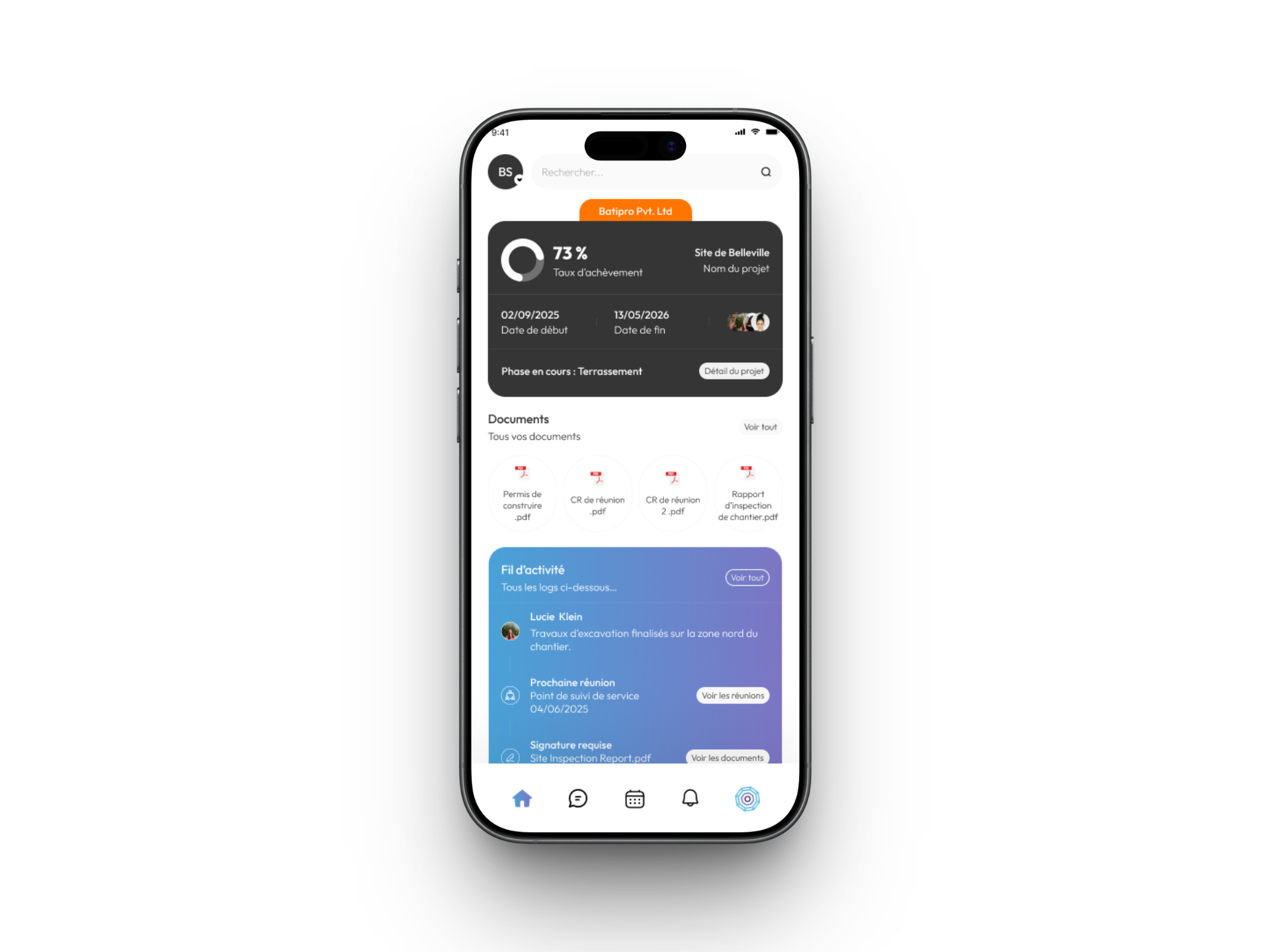
PIYA fits into your project information system
Centralize documents, photos, meetings, milestones and conversations to give your construction projects a clearer operational framework.
7 Criteria for Choosing Construction Management Software
Choosing construction management software is not about comparing dozens of features or searching for the platform that can do everything.
It is about selecting a solution that meets your company’s real needs and can fit sustainably into your organization.
This approach is consistent with McKinsey & Company, which emphasizes that successful digital transformations in engineering and construction require companies to move beyond isolated technology pilots and focus on how digital creates value across the organization.
Before making a decision, here are the seven criteria to evaluate.
1. Start by identifying the problem you want to solve
Many companies start by comparing software before clearly defining their needs.
Take the time to list the difficulties you face today.
Are your problems mainly related to internal business management? Or are they more about project tracking and information flow between different stakeholders?
Answering this question will already help you eliminate many solutions that do not fit your context.
2. Separate business management from project management
As we have seen throughout this guide, these two activities respond to different needs.
If your priority is to manage estimates, invoices, accounting, human resources or profitability, you should first look at internal business management software.
Conversely, if your main challenge is coordinating project stakeholders, tracking progress, sharing documents, managing information flow or communicating with the people who need visibility on the project, construction project management software will be more relevant.
Depending on the project, these stakeholders may be your employees, subcontractors, suppliers, the project owner, the construction manager, an architect, an engineering firm or the end client. The challenge remains the same: give everyone access to the right information, at the right time and with the right level of visibility.
In many companies, these two approaches are complementary.
The goal is not to choose between them, but to understand which one addresses your priority need.
3. Choose a solution that fits your company size
Not all companies have the same needs.
An independent contractor will not have the same expectations as a construction company with fifty employees.
Choosing a solution that is too complex can slow down adoption and push teams back to their old working methods.
Conversely, a growing company must make sure the tools it chooses can support its development over time.
The best software is therefore not the most complete.
It is the one that matches your company’s level of maturity.
4. Make sure your teams will actually use it
Software only creates value if the people who use it every day adopt it.
Before making your choice, look carefully at the user experience.
Is the tool easy to learn?
Are important pieces of information easy to find?
Can field teams use it without complex training?
A tool that is not adopted quickly becomes an additional cost rather than an investment.
5. Check that it works for field constraints
In construction, information is often produced on project sites.
Photos, documents, meeting notes, approvals and conversations with stakeholders must be easy to capture directly from the field.
Before choosing a solution, make sure its mobile experience is truly designed for operational teams and is not simply a desktop version squeezed onto a phone.
6. Anticipate how your company will evolve
Your company’s needs will evolve.
The software you choose today must be able to support that evolution.
Ask simple questions.
Will it still be suitable if you hire new employees?
If you manage more projects?
If your processes become more complex?
Choosing software is also about preparing the next stages of your company’s growth.
7. Prioritize architecture over an all-in-one promise
Keep the main idea of this guide in mind.
A successful digital transformation does not depend on a miracle tool.
It depends on how you organize your company.
Each tool should answer a clearly identified need and fit naturally into your digital architecture.
Performance does not come from the number of features.
It comes from the ability of your tools to move the right information to the right person at the right time.
Checklist: before choosing construction management software
- Have I clearly identified the problem I want to solve?
- Does my need relate to internal business management, project tracking or both?
- Is the solution adapted to my company size?
- Will my teams actually use it every day?
- Does it fit the constraints of the field and mobile work?
- Can it support the growth of my company?
- Does it fit into a coherent digital architecture instead of trying to replace everything?
What Should You Take Away?
Choosing construction management software is not about finding the solution with the longest feature list.
It is first about understanding your company’s needs.
For a long time, digital transformation in construction was reduced to one simple question: which software should we choose?
In reality, that question comes too early.
Before comparing solutions, a company must first understand how it works, identify the information it handles every day and distinguish what belongs to internal business management from what belongs to project management.
Only after this reflection does it become possible to choose tools that truly fit the organization.
For some companies, this will mean using construction project management software.
For others, the priority will be to structure internal management with business management software.
In many cases, both approaches will be complementary.
The goal is therefore not to look for software that can do everything.
It is to build a coherent digital architecture where every tool answers a clearly identified need and contributes to a better flow of information.
The companies that succeed with digital transformation will not be the ones that accumulate the most software.
They will be the ones that choose the right tools, at the right time, to meet the real needs of their organization.
Ultimately, choosing construction management software is not an IT decision.
It is a strategic decision that supports the long-term development of your company.
Want to bring more structure to your construction projects?
PIYA helps construction professionals centralize project information, structure communication and improve collaboration between all stakeholders.
FAQ
Frequently Asked Questions
How do you choose construction management software for your company?
Choosing construction management software should start with your business needs, not with the feature lists promoted by vendors. Before comparing solutions, identify the problems you want to solve, distinguish internal business management needs from project management needs, then choose a tool that matches your company size, workflow and digital maturity.
What is the difference between business management software and construction project management software?
Business management software is designed to manage the company: estimates, invoices, accounting, purchasing, human resources, timesheets, materials, profitability and reporting. Construction project management software focuses on projects: documents, photos, meetings, planning, stakeholder communication, progress tracking and decision history.
Does a small contractor need business management software?
Not necessarily. For a small contractor or trades business, internal management may remain relatively simple. However, as soon as the business manages multiple projects, a project tracking and collaboration tool can quickly become valuable for communication, visibility and traceability.
Can a construction company use several software tools?
Yes. A strong digital ecosystem is not necessarily built around one tool that does everything. It is built around complementary tools, each with a clear purpose. The goal is not to reduce the number of tools at all costs, but to make sure information flows clearly between the systems your company uses.
When does business management software become relevant?
There is no universal threshold. The need depends more on organizational complexity than on headcount alone. A small company managing many projects, resources and financial workflows may need more structure than a larger company with a simpler operating model.
How can a construction company avoid a failed digital transformation?
Failures rarely come from the software alone. They often come from unclear needs, limited user adoption or choosing a solution that does not match the way the company actually works. A successful digital transformation starts with the organization, processes and information flow before focusing on tools.
Sources