

Your project looks active, but do you really know where it stands?
Crews are on site. Materials are moving. Meetings are happening. Clients seem reassured.
Then, a few weeks later, you discover that a key stage has slipped, a decision was never documented, or a critical piece of information is buried somewhere between emails, text messages, photos, and meeting notes.
This is not always a competence problem. In many cases, it is a visibility problem.
Effective construction project tracking gives field teams, office teams, managers, and clients a clearer view of what is actually happening on site.
Construction project tracking in a few key figures
Before looking at practical methods, it is worth understanding why project tracking has become such a critical issue for construction companies.
- McKinsey estimates that 98% of megaprojects experience cost overruns greater than 30%, while 77% are delivered at least 40% later than initially planned.
- Although these figures focus on large-scale projects, the underlying causes are often the same for small and medium-sized construction businesses: fragmented information, delayed decisions, poor communication, and limited visibility into project progress.
- Autodesk and FMI reported that 52% of rework globally was caused by poor project data and communication.
- The same Autodesk/FMI report estimated that poor data and miscommunication accounted for $31.3 billion in rework costs in the United States alone.
- A UK-focused academic review identified "waiting for information" as one of the most significant causes of delays across construction projects.
Whether you're managing a large infrastructure project, a residential renovation, or several jobsites simultaneously, the challenge remains the same: making sure the right people have access to the right information at the right time.
These figures point to a simple reality: delays are not only caused by weather, site conditions, or labour shortages. They often stem from missing information, late decisions, unclear responsibilities, and poor visibility across the project lifecycle.
Sources: McKinsey — The Construction Productivity Imperative, Autodesk/FMI — Construction Disconnected, University of Greenwich — Causes of Project Delay in Construction.
Why do so many construction projects fall behind schedule?
When a construction project is delayed, there is rarely one single cause. More often, delays come from a chain of small breakdowns.
- Information is scattered across several tools.
- Decisions are not documented.
- The project schedule is not updated regularly.
- Field teams and office teams do not always work from the same information.
- Completed, ongoing, and blocked stages are not clearly visible.
The difficult part is that a project can look under control for weeks before the first visible warning signs appear.
The consequences of poor construction project tracking
Poor tracking does not only create delays. It also affects margins, client relationships, and the administrative workload of the team.
Lower profitability
Every delay can trigger additional costs: rescheduling crews, extending interventions, dealing with rework, or spending extra time managing issues that could have been identified earlier.
A weaker client relationship
When clients lack visibility, they naturally ask for updates. Calls increase. Follow-ups become more frequent. Trust may start to weaken.
More administrative work
Teams spend more time searching for information instead of moving the project forward.
What are the signs of poor construction project tracking?
Some companies believe they have a tracking process in place, but several signs suggest otherwise.
- Project information is scattered across several channels.
- Team members regularly ask where to find a document.
- Meeting notes are rarely consulted after the meeting.
- Clients frequently request progress updates.
- Delays are discovered too late.
- Decisions made during meetings are not always followed up.
- Jobsite photos are stored in several different places.
A good tracking process should help every stakeholder find the right information quickly, without having to chase messages or documents.
5 ways to improve construction project tracking
Method 1: define clear milestones from the start
The structural work is complete. The next teams are expected to start. Everything seems under control. But no one has formally validated the previous stage.
A few days later, the schedule starts to slip.
Without clear milestones, it becomes difficult to know what is completed, what is still in progress, and what is blocking the next stage.
Break each project into major phases: preparation, demolition, structural work, fit-out, finishing, handover. Then attach clear validation criteria to each milestone.
Result: you gain a clearer view of real progress and identify delays faster.
Method 2: centralize all project information
The photo is in a text message. The estimate is in an email. The meeting note is in a PDF. The drawing is stored on someone’s computer. No one is completely sure where the latest version is.
Scattered information creates duplicates, mistakes, confusion, and wasted time.
Take a small construction business managing five projects at the same time. The project manager receives jobsite photos through messaging apps, quotes through email, drawings through shared folders, and decisions through meeting notes.
When a client asks a question, it can take several minutes to find the right information. Over a year, that can turn into dozens of hours that could have been spent managing projects or growing the business.
The method is simple: centralize documents, photos, decisions, meeting notes, and important communications in one place.
Method 3: detect issues before they become delays
A project may be drifting for several days before anyone notices, simply because no tracking indicators are being reviewed.
The later an issue is identified, the more expensive it becomes to correct.
A weekly review of completed stages, delayed tasks, pending decisions, and required approvals is often enough to spot early warning signs.
Result: issues are handled before they affect the overall schedule.
Simplify the way you track construction projects
Between documents, photos, meeting notes, field updates, and client communications, it becomes difficult to keep a clear view of real project progress.
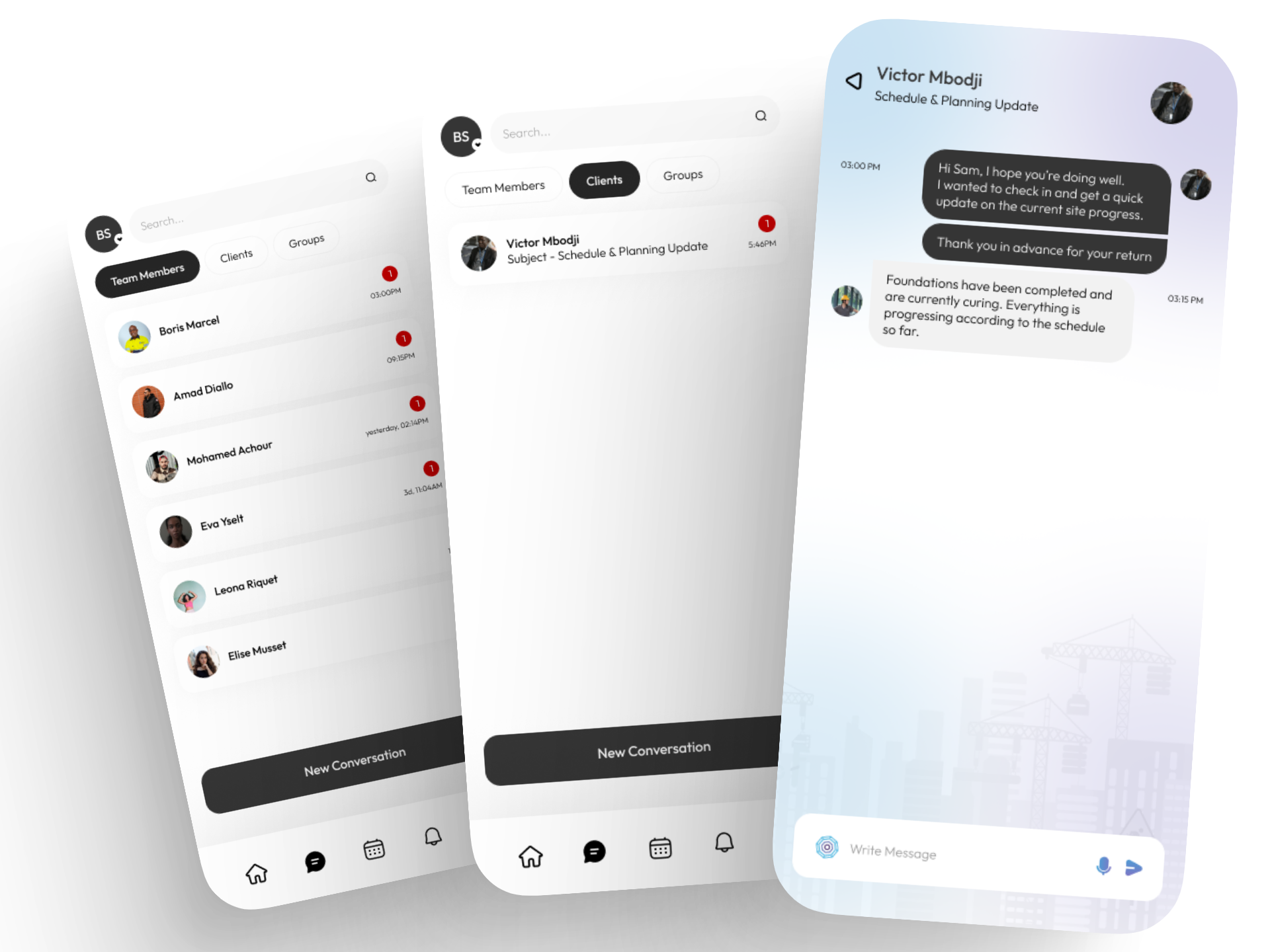
PIYA helps construction businesses centralize documents, structure milestones, share progress with clients, and keep track of important decisions.

Which indicators should you track to stay in control?
Construction project tracking is not only about checking whether the project is moving forward. It is about measuring its real status through a few simple indicators.
1. Overall progress percentage
This helps you see where the project stands compared with the initial schedule.
2. Completed milestones
Each validated stage acts as an important control point.
3. Delayed tasks
Identifying delayed actions early helps you understand what could impact the next stages.
4. Pending approvals
Some decisions can block an entire project if they are not made on time.
5. Open issues and rework items
Tracking them helps reduce surprises at the end of the project.
6. Progress photos
Photos are often the simplest proof of what has actually happened on site.
Method 4: document important decisions
A decision is made during a site meeting. Two weeks later, no one remembers exactly what was agreed.
Undocumented decisions quickly become sources of disagreement. To avoid this, record decisions, responsibilities, deadlines, and next actions systematically.
Result: every stakeholder has a clear record of what was agreed and what needs to happen next.
Method 5: share progress updates with clients
A client calls regularly to ask where the project stands. This is not necessarily a trust issue. It is often a visibility issue.
When clients can see completed stages, progress photos, upcoming interventions, and available documents, communication becomes smoother.
Result: clients feel reassured, interruptions decrease, and the relationship becomes more transparent.
What tools can be used to track construction projects?
Many companies start with spreadsheets, emails, messaging apps, and shared folders. These tools can work on small projects.
But as the number of projects grows, their limits quickly appear: poor traceability, duplicate documents, scattered information, and no clear overview.
Dedicated construction project tracking platforms help centralize information, improve collaboration, and strengthen project traceability.
Conclusion
Construction projects rarely go off track overnight. Delays often appear when information is scattered, decisions are not documented, and no one has a clear view of real progress.
The most effective companies are not always those with the largest teams or budgets. They are often the ones with the clearest visibility on their projects.
When the right information is available at the right time, decisions are faster, teams are better coordinated, and clients feel more reassured.
Want to see PIYA in action?
Book a personalized demo and discover how PIYA can fit your projects, your organization, and the way your team works.
FAQ
Frequently Asked Questions
How do you track construction project progress effectively?
By defining clear milestones, centralizing information, and regularly comparing planned progress with what is actually happening on site.
What indicators should be tracked on a construction project?
Completed milestones, delayed tasks, pending approvals, open issues, rework items, and progress photos.
Is a spreadsheet enough to track construction projects?
A spreadsheet may work for small projects, but it quickly becomes limited when several stakeholders, documents, photos, and decisions need to be managed.
How can construction delays be reduced?
By detecting issues early, documenting important decisions, and maintaining clear communication between all stakeholders.
What software should be used for construction project tracking?
The right software depends on the company’s size and project needs. A dedicated app usually helps improve visibility, collaboration, and information traceability.