
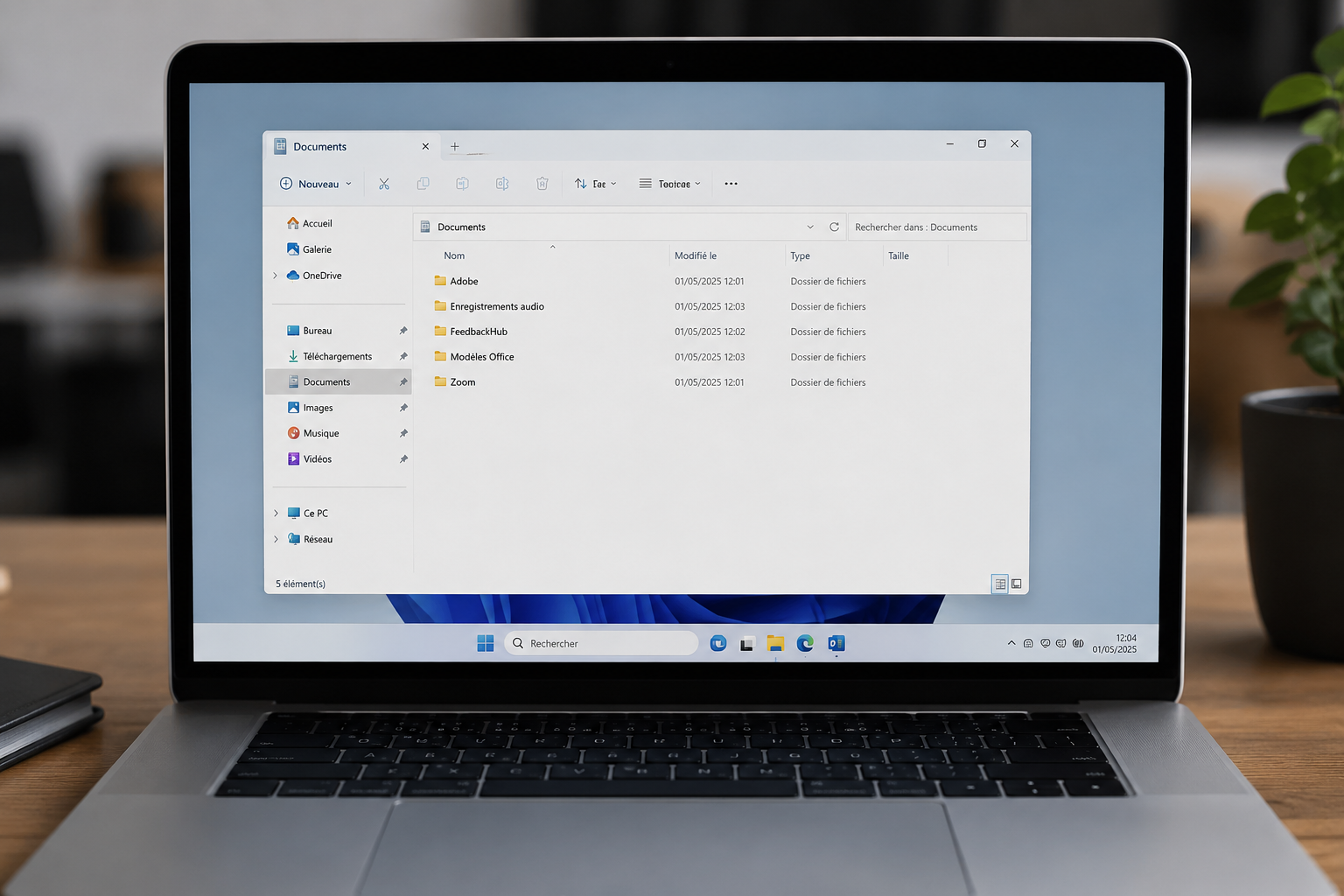
You know the document exists. But where is it?
A client asks for the latest signed estimate. A project manager needs the approved drawing. A subcontractor is waiting for a technical sheet. You know these documents exist.
But you still spend several minutes looking for them.
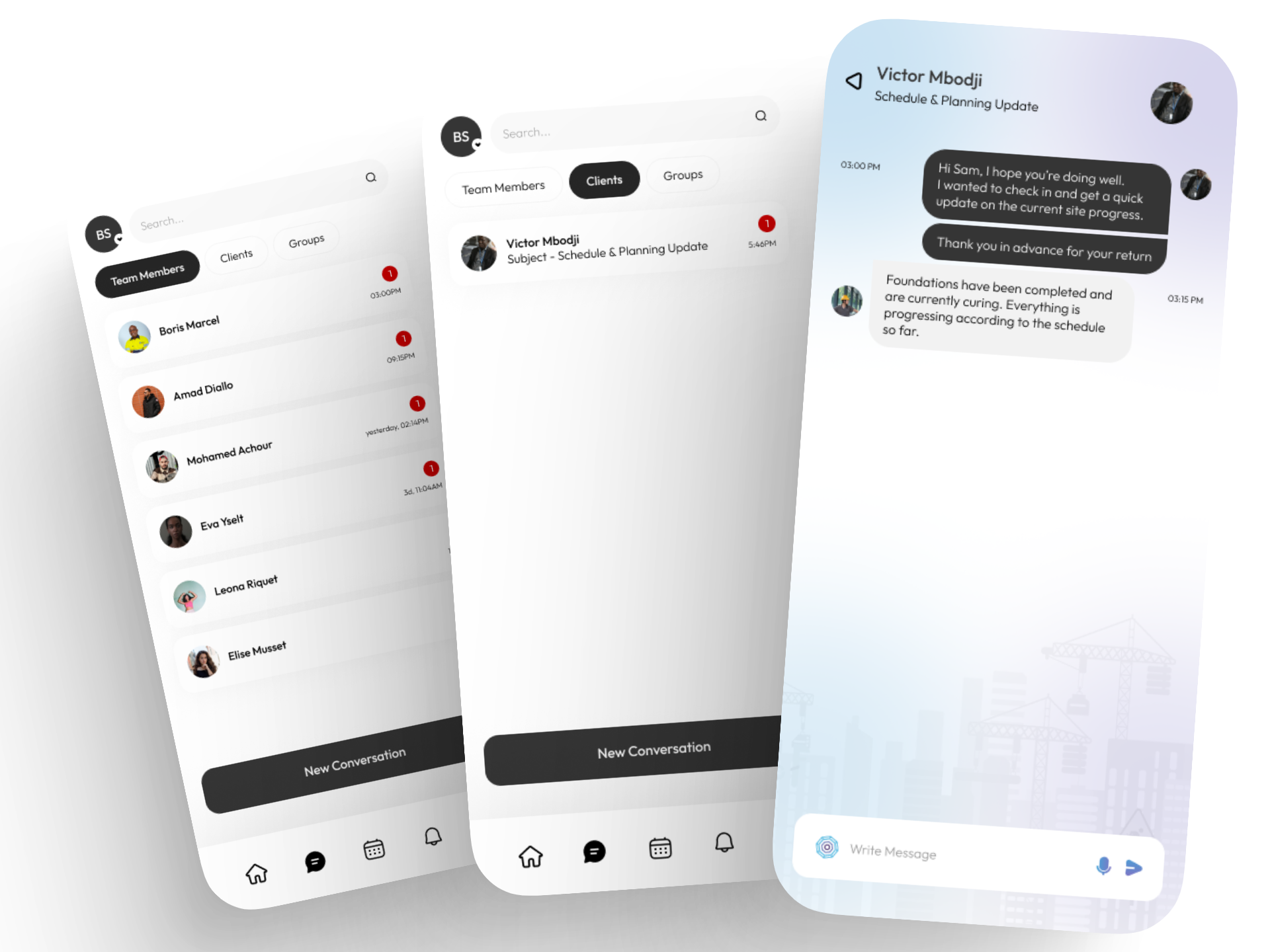
Email. WhatsApp. Shared folders. Phone storage. Laptop folders. Old conversations.
The files are not necessarily lost. They are scattered. And as a project moves forward, that fragmentation becomes harder to manage.
The real issue is often deeper than filing. Documents gradually become separated from the context that gives them value.
A construction project produces far more than drawings and estimates
Even a relatively simple project can generate dozens of documents and media files.
- Estimates, contracts and change orders.
- Drawings and updated versions.
- Delivery notes and invoices.
- Meeting notes and site reports.
- Progress photos.
- Technical sheets and product documentation.
- Warranties, insurance documents, handover documents and punch list items.
The real challenge is not the number of documents. It is their ability to remain connected to the right moment in the project.
Information management has become a major construction issue
Autodesk and FMI reported that 52% of global rework in construction was caused by poor project data and communication. The same report estimated that poor project data and miscommunication accounted for $31.3 billion in rework costs in the United States.
ISO 19650 also highlights the importance of information management in construction projects, focusing on availability, quality, traceability and structured information exchange between stakeholders.
These studies often focus on large projects. Yet the same mechanisms affect small and medium-sized construction companies.
Sources: Autodesk/FMI — Construction Disconnected, ISO 19650-1, McKinsey — Construction productivity.
Why is it so hard to find a document?
Documents almost never disappear. They still exist somewhere. The problem is that they gradually spread across tools, people and versions.
An estimate is sent by email. A photo is shared on WhatsApp. A drawing is stored in a shared drive. A meeting note is written elsewhere. An approval is given verbally during a site meeting.
The problem is not that your documents are poorly filed. The problem is that they are disconnected from their context.
Centralize documents before they become impossible to find
Drawings, estimates, photos, reports and approvals are more valuable when they remain attached to the right project and context.
The consequences go far beyond wasted time
A missing document may look like a minor inconvenience. In reality, the impact can be much bigger: delayed approvals, wrong references, outdated drawings, blocked invoices or missing proof at handover.
How to regain control of construction documents
Centralize information
A single source of truth gives everyone a clear place to look.
Keep document context
A document should remain attached to the moment in the project where it matters.
Limit multiple versions
One version should be clearly identified as the reference, especially for drawings, estimates, technical sheets and approvals.
Give the right access to the right people
A client, subcontractor, project manager or design office does not need the same level of information.
Make search easier than browsing folders
A good document system should not require people to know the exact folder where a file was stored.
What if your documents naturally followed project progress?
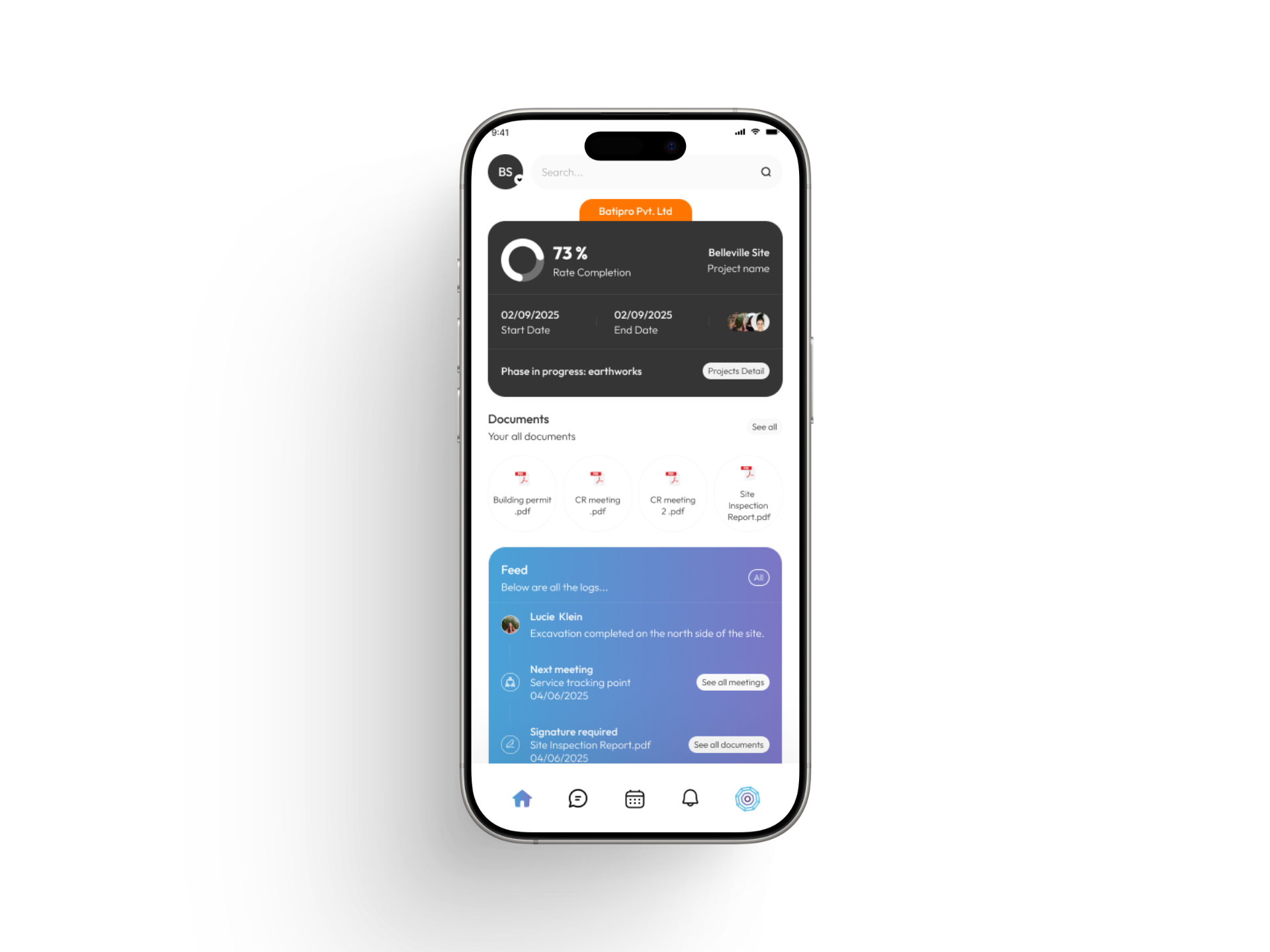
PIYA takes a different approach. A project is already structured around stages, milestones and progress. Why create a second document structure disconnected from the jobsite?
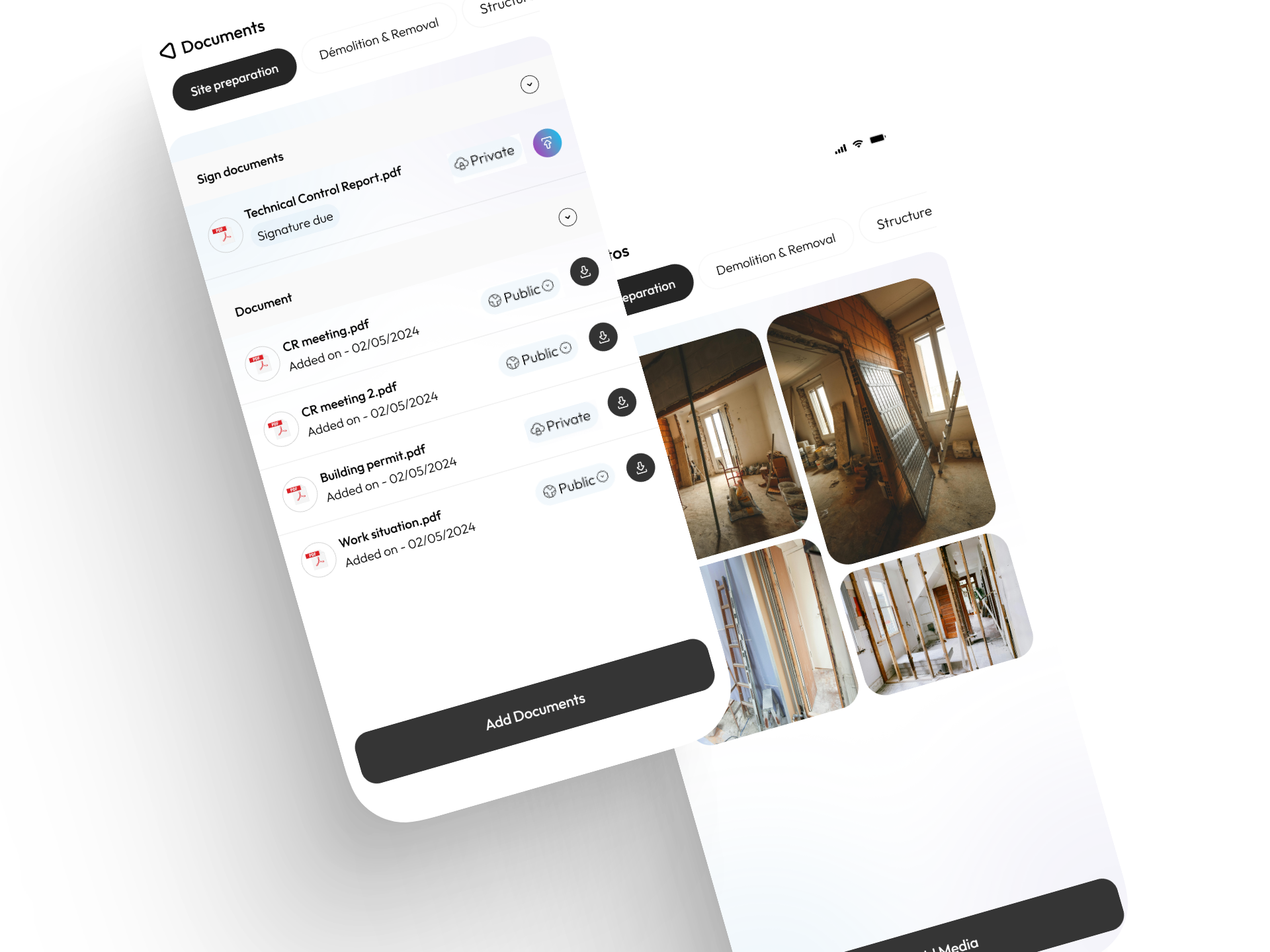
While a stage is active, photos, estimates, reports and shared documents remain associated with that stage. When the stage is completed, new documents are naturally attached to the next one.
With PIYA, you no longer organize your documents. Your project organizes them for you.
Finding a document should not take several minutes
In PIYA, you can type the document name in the project search bar to find it quickly. Combined with document organization by stages and milestones, this makes information easier to retrieve without opening dozens of folders or browsing several conversations.
Your documents should evolve with your project
Centralize drawings, estimates, photos, reports and approvals in an environment that follows the natural rhythm of your project.
Digital tools should simplify your organization, not make it heavier
Digital transformation should not mean adding more software and more administrative work. Its role is to remove low-value tasks: searching for documents, checking versions, asking for files again, or rebuilding context after the fact.
Conclusion
For years, construction companies have learned to organize documents into folders. Maybe it is time to change perspective.
A document is not meant to live alone inside a folder. It should remain connected to its project, its stage and the decisions around it.
The real challenge may not be to file documents better. It is to never lose the thread of the project.
Find your documents without opening 40 folders
PIYA centralizes documents, photos and project information while naturally attaching them to project stages.
FAQ
Frequently Asked Questions
Why are construction documents hard to find?
Because they are often scattered across emails, phones, shared folders, messaging apps and multiple file versions.
Which construction documents should be centralized?
Estimates, contracts, change orders, drawings, photos, meeting notes, invoices, delivery notes, technical sheets, warranties, insurance documents and handover documents.
How do you avoid using the wrong document version?
By creating a single source of truth, clearly identifying approved documents and avoiding several competing versions of the same file.
Why attach documents to project stages?
Because it preserves context: the project moment, related decision, progress stage and stakeholders involved.
How do you quickly find a document in PIYA?
In PIYA, you can type the document name in the project search bar to find it quickly.